Using the Hunger Scale to Tune into Your Body’s Natural Cues
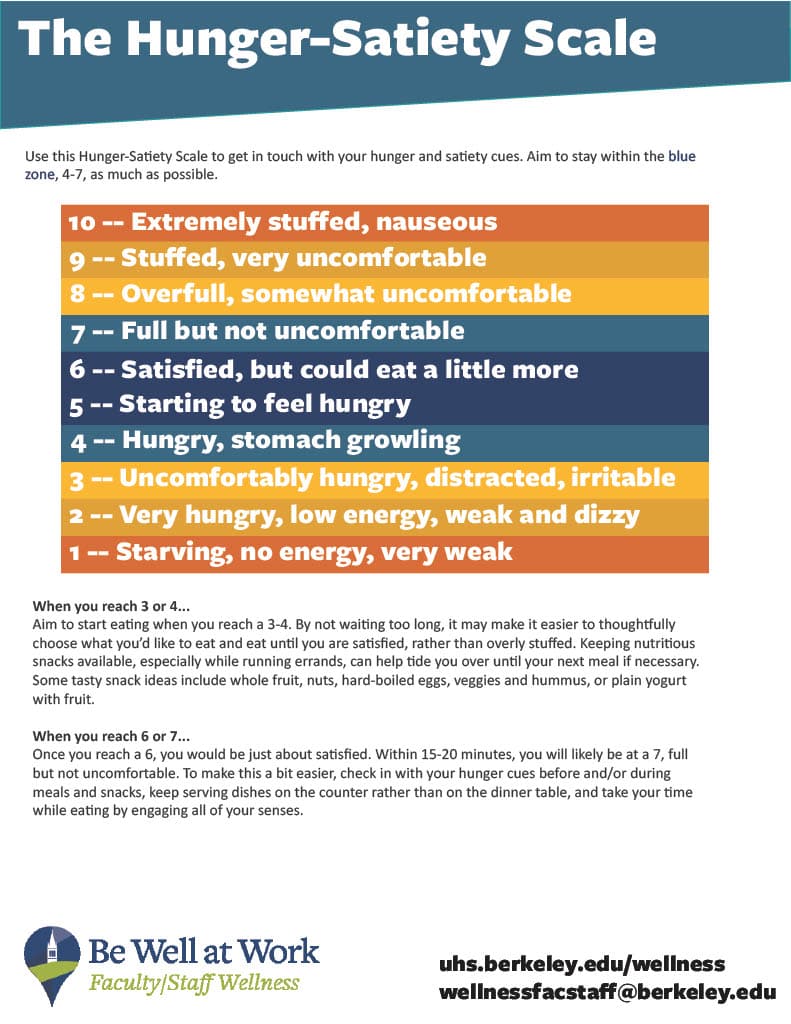
Intuitive Eating is all about reconnecting with your body’s natural signals for hunger and fullness. One of the best tools to help with this practice is the Hunger-Satiety Scale. Think of hunger and fullness on a scale of 1 to 10: 1 means you’re absolutely starving, while 10 means you’re overly stuffed and uncomfortable.
The goal is to eat when you’re truly hungry and stop when you’re satisfied, not stuffed. The Hunger Scale can help you better understand where you’re at on this scale and guide you toward healthier eating habits.
How the Intuitive Eating Hunger Scale Works
The Hunger Scale is a simple tool to help you tune into your body’s signals and become more aware of your natural hunger and fullness cues. If you’re new to this, setting reminders or alarms on your phone can help you check in with yourself throughout the day. For example, if it’s time for a meal but you’re at an 8 on the scale (not hungry), wait 30-60 minutes and reassess.
How to Use the Hunger Scale When Eating
Here’s how to use the Hunger Scale to guide your eating habits:
- Before Eating:
Ask yourself, “Am I truly hungry?” and “What is my hunger level on the scale?” Ideally, you want to eat when you’re at a 3 or 4—hungry, but not starving. - During the Meal:
Check in with yourself every so often to see where your fullness level is. Are you still hungry, or are you starting to feel satisfied? - After the Meal:
Aim to finish your meal at around a 7—this is where you feel comfortably satisfied, not stuffed. - Eat Consciously:
Try to eat without distractions like TV or phone scrolling. Focus on your food, chew slowly, and enjoy the experience of eating.
Dietitian Tip: Don’t Ignore Your Hunger or Fullness Cues
Just like you drink when you’re thirsty, it’s important to honor your hunger by eating when you’re hungry and stopping when you’re satisfied. Hunger and fullness aren’t just physical—they show up in different ways.
- Hunger cues might include:
- Fatigue
- Anxiety
- Shakiness
- Headaches
- Loss of focus
- Gas or indigestion
- Fullness cues could show up as:
- A reduced desire to eat
- Not thinking about food at all
- Feeling more energized
By using the Hunger Scale to tune into your body’s signals, you can stop eating based on external rules and instead, listen to what your body really needs. Over time, this will help you feel more in control of your eating habits and make your relationship with food more balanced and natural.